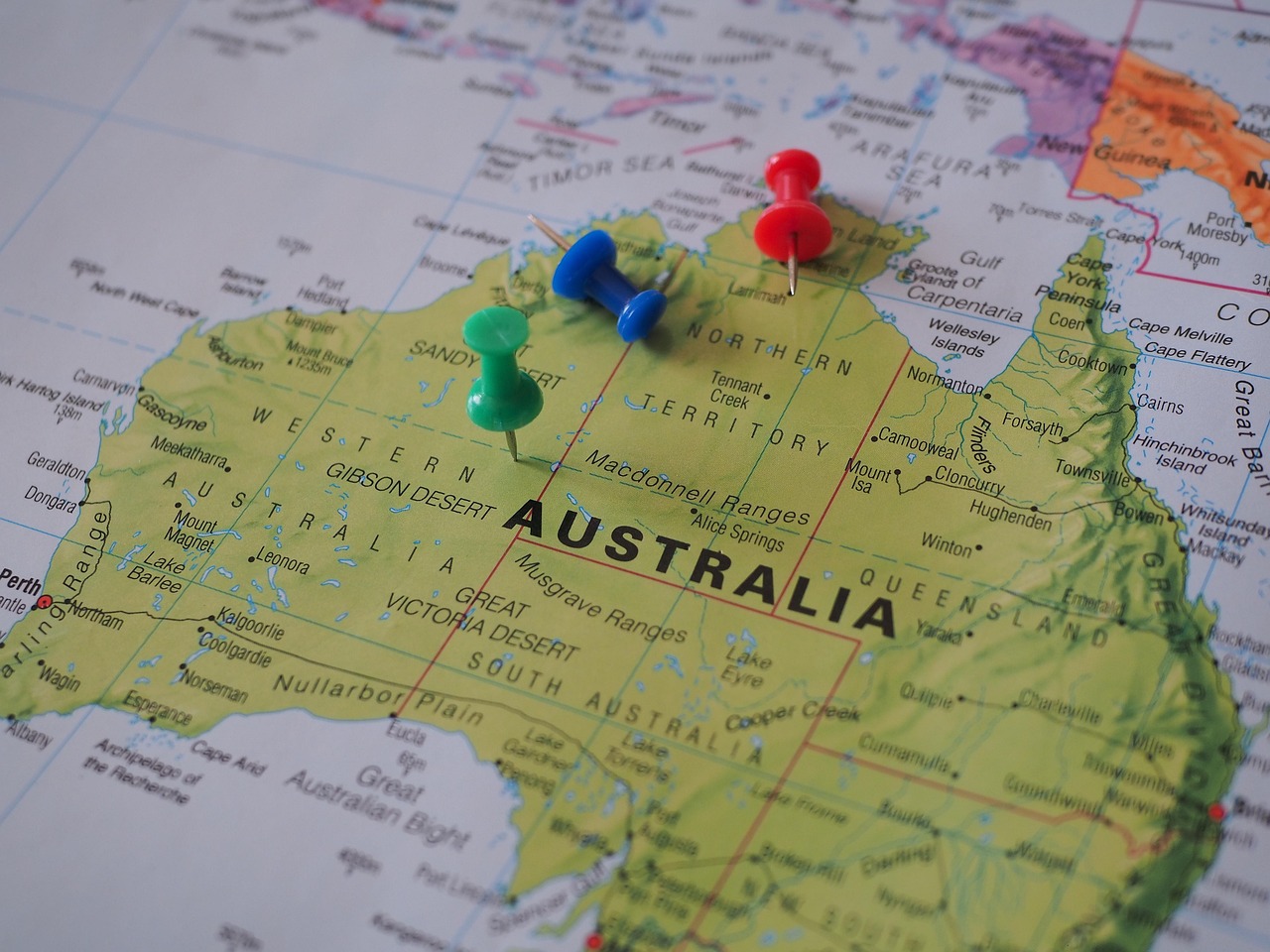
Hockey in Australia is shaped mainly by field hockey, where the Kookaburras and Hockeyroos sit at the center of a deep national culture. The map below also includes Australia’s ice hockey cities, especially the Australian Ice Hockey League markets in Melbourne, Sydney, Canberra, Newcastle, Adelaide, Brisbane, Perth, and the Central Coast. Perth deserves special weight because Perth Hockey Stadium is a major national field-hockey base, while the AIHL and Ice Hockey Australia give the ice-hockey side its current national structure.
Hockey in Australia is a small but persistent part of the country’s sporting landscape. Australia is not usually thought of as an ice hockey country, and the sport sits far behind Australian rules football, rugby league, rugby union, cricket, soccer, basketball, netball, tennis, swimming, and field hockey in national visibility. Yet ice hockey has been played in Australia for more than a century, and the country has built a real hockey structure through indoor rinks, state associations, national leagues, international teams, and a committed community of players, coaches, officials, families, and supporters.
Australian hockey is shaped by geography. Unlike Canada, Finland, Sweden, Russia, or the northern United States, Australia does not have a natural outdoor winter culture built around frozen ponds and backyard rinks. Ice hockey exists through indoor facilities, urban participation, and the efforts of clubs that keep the sport alive in major cities and regional hubs. That makes Australian hockey different from most traditional hockey countries. It is not a mass winter pastime. It is a rink-based, community-driven, mostly amateur and semi-professional sport that survives through commitment rather than climate.
The national governing body is Ice Hockey Australia, which oversees the sport nationally and is affiliated with the International Ice Hockey Federation. Australia is listed by the IIHF as a full member, with 20 indoor IIHF-size rinks and more than 2,900 senior male players, more than 1,100 senior female players, and more than 1,200 youth players in the IIHF’s published national association profile.
The History of Hockey in Australia
The history of ice hockey in Australia is older than many people expect. The sport developed in the early twentieth century through indoor ice facilities, skating culture, and organized clubs in cities such as Melbourne and Sydney. Australia’s distance from the traditional centers of world hockey made growth difficult, but the game still found enough of a foothold to form local competitions and state structures.
Melbourne has been especially important to the early story of Australian ice hockey. Ice Hockey Australia’s historical material notes that the Victorian Amateur Ice Hockey Association included four foundation clubs: Brighton, the Beavers, the Melburnians, and the first champion club, the Melburnians. That early club structure matters because Australian hockey has always depended on local organization. The country could not rely on outdoor ice culture or massive natural participation. It needed rinks, clubs, volunteers, and formal competition.
Over time, Australian ice hockey developed through state-based competition, national championships, and representative teams. The sport remained small, but it became organized enough to support national teams and a domestic league system. Australia’s men’s national team has competed internationally, including at the Ice Hockey World Championships, and the country remains part of the IIHF structure. Its competitive level is not near the top hockey powers, but its continued international participation gives Australian hockey a link to the wider global game.
The creation of the Australian Ice Hockey League in 2000 was one of the most important modern moments in the sport’s domestic history. The AIHL was formed for the 2000 season by the Sydney Bears, Canberra Knights, and Adelaide Avalanche, giving Australia a national top-level men’s competition. The league created a clearer national platform for elite domestic players, imports, fans, and clubs across multiple states and territories.
Women’s hockey also became more organized with the development of the Australian Women’s Ice Hockey League. Ice Hockey Australia describes the AWIHL as the premier women’s ice hockey competition in Australia, showcasing the highest level of female athletes in the country. Together, the AIHL and AWIHL give Australia a men’s and women’s national league structure, even if both operate within the limits of a small ice hockey market.
Where Hockey Fits in Australian Sports Culture
Hockey in Australia occupies a niche position. The country has one of the most crowded sporting markets in the world, and most winter sports attention goes to Australian rules football, rugby league, rugby union, and soccer. Cricket dominates the summer conversation, while swimming, tennis, basketball, netball, motorsport, and Olympic sports also compete for attention. In that environment, ice hockey has to carve out space through dedicated communities rather than broad national habit.
The sport’s limited visibility is not mainly about lack of interest; it is about infrastructure and culture. Ice hockey requires indoor rinks, expensive equipment, trained coaches, officials, and organized leagues. Australia has the population and sporting appetite to support many sports, but ice hockey’s facilities are limited compared with sports played on fields, courts, beaches, and ovals. The IIHF’s listing of 20 indoor IIHF-size rinks for Australia shows the basic issue: the sport exists nationally, but its facility base is relatively small for a country of more than 26 million people.
That facility reality shapes the culture of Australian hockey. Players and families often have to travel, train at difficult hours, and commit strongly to stay involved. The sport can feel more like a close network than a mainstream system. Clubs, rinks, and leagues become the center of the hockey community because there are not endless alternatives nearby. In many Australian cities, a rink is not just a venue; it is the entire local hockey ecosystem.
Australian hockey also has a different climate story from most ice hockey countries. The sport is not connected to frozen lakes or backyard winter traditions. Instead, it is part of Australia’s indoor sports culture. That gives it a distinctive identity: hockey in Australia is chosen, not inherited through the weather. People become involved because they discover the game, join a club, follow a local team, watch the NHL, enter through skating, or connect through family and community.
The NHL has helped shape awareness, especially among fans who follow North American hockey online or through streaming. Australian fans may support NHL teams, play fantasy hockey, follow international tournaments, or develop interest through video games and global sports media. That fandom does not always translate directly into participation, but it gives Australian hockey a broader cultural connection to the global game.
Ice hockey in Australia also sits beside field hockey, which is much more established in the country’s broader sporting history. Australia is a major field hockey nation, with the Kookaburras and Hockeyroos representing one of the strongest national-team traditions in that sport. That creates an interesting contrast: “hockey” in Australia can mean field hockey to many people, while ice hockey remains the smaller winter-sport version with a more specialized audience.
Hockey Teams, Leagues, and Competitions in Australia
The Australian Ice Hockey League is the top men’s ice hockey competition in the country. It was founded in 2000 and is sanctioned by Ice Hockey Australia. The AIHL gives Australian ice hockey its main national club platform, with teams across several states and territories and a season built around domestic competition, imports, local players, and playoff hockey.
The AIHL matters because Australia’s ice hockey geography is spread out. Teams are not clustered in one small region; they exist across a country with huge travel distances. That makes league organization more difficult than in many European countries where clubs are closer together. The AIHL has to operate in a sports environment where travel, rink availability, player depth, and club finances all shape what is possible.
The league also gives fans a clear entry point. For many Australians, local AIHL teams are the most accessible form of live ice hockey. The NHL may be the global reference point, but the AIHL is where Australian fans can attend games, follow domestic rivalries, support local players, and see the sport in person. The league’s importance is therefore bigger than its professional status. It is the main public stage for men’s ice hockey in Australia.
Women’s hockey has its own national platform through the Australian Women’s Ice Hockey League. The AWIHL is the country’s top women’s competition and has become central to the development of female players. The league gives elite women a domestic structure, supports national-team preparation, and helps make women’s ice hockey visible within the Australian hockey community. Ice Hockey Australia identifies the AWIHL as the premier women’s ice hockey competition in the country.
Australia also has state-based hockey structures, junior competitions, recreational leagues, and national championships. These levels matter because the sport’s base is not large enough to rely only on national leagues. Local clubs introduce players to the game, maintain youth programs, support adult participation, and connect families to the sport. State associations and rinks are often where Australian hockey is most deeply felt.
Internationally, Australia competes within the IIHF system. The country is not a top-division hockey power, but national-team competition gives Australian players a higher target and gives the sport a reason to maintain development standards. For Australian players, representing the national team can be the peak of the domestic hockey pathway.
Famous Hockey Players from Australia
Australia has not produced the same volume of internationally famous ice hockey players as Canada, the United States, Sweden, Finland, Russia, Czechia, or Switzerland. That is expected for a country with limited rinks, a small player pool, and a sports culture built around other games. Still, Australian hockey has produced players, coaches, officials, and national-team figures who are important within the country’s own hockey story.
The most important names in Australian hockey often come from domestic leagues and national teams rather than the NHL. Players who compete for AIHL clubs, AWIHL clubs, and Australian national teams help define the sport locally. In a smaller hockey country, fame works differently. A player does not have to be an NHL star to matter. National-team captains, long-serving domestic players, top women’s players, goaltenders, imports who elevate the league, and local club leaders can all become significant figures in the Australian hockey community.
Nathan Walker is the clearest example of an Australian player reaching the highest level of the sport. Born in Wales and raised in Australia, Walker became widely associated with Australian hockey after developing in the country before continuing his career overseas and reaching the NHL. His story matters because it gave Australian hockey a visible connection to the world’s top league and showed young players that the Australian pathway, while difficult, could connect to elite international hockey.
Women’s hockey has also produced important Australian national-team players through the AWIHL and international competition. The women’s game is especially important because it gives Australia another route into global hockey relevance. In smaller ice hockey countries, women’s national teams often carry a large share of the sport’s international identity, and Australia fits that pattern.
The broader point is that Australian hockey should not be judged only by NHL production. Its player story is about persistence, domestic leadership, national-team commitment, and the challenge of developing elite athletes in a country where ice time is limited and hockey is not a mainstream childhood sport.
Youth Hockey and Player Development in Australia
Youth hockey in Australia depends heavily on rink access. In traditional hockey countries, young players may grow up surrounded by outdoor ice, neighborhood rinks, school programs, and family hockey culture. In Australia, the pathway usually starts through indoor rinks, skating lessons, club programs, family discovery, or exposure to professional and international hockey.
The limited number of rinks affects everything. It influences how often players can train, how far families must travel, how many teams a region can support, and how quickly young athletes can move into stronger competition. The IIHF profile lists Australia with 20 indoor IIHF-size rinks, which is enough to support an organized national scene but not enough to make hockey widely accessible across the country.
Because of that, player development in Australia often requires commitment beyond normal youth-sport participation. Families may need to handle early-morning ice times, long travel, limited local competition, and high equipment costs. The sport rewards families who are deeply committed, but those barriers can limit broader growth.
The national leagues help provide role models. AIHL and AWIHL teams give young players something local to watch and aspire toward. A child in Australia who sees domestic players competing at the country’s highest level can imagine a hockey pathway that does not begin and end with distant NHL highlights. Local clubs, state teams, and national tournaments are especially important because they make the sport tangible.
Girls’ hockey is one of the most important development areas. The AWIHL gives female players a top domestic goal, while the national team gives the best players an international target. In a country where ice hockey is already niche, girls’ and women’s development can help expand the overall participation base and make the sport more sustainable.
Australia’s development challenge is not a lack of sporting talent. The country produces elite athletes across many sports. The challenge is converting enough athletes into hockey players early enough, giving them ice time, keeping them in the sport, and connecting the best prospects to international opportunities when domestic competition is not enough.
The Future of Hockey in Australia
The future of hockey in Australia depends on facilities, visibility, youth recruitment, and domestic league stability. The country already has a national governing body, men’s and women’s leagues, state associations, national teams, and a committed player base. That gives the sport a real foundation. The question is how much wider that foundation can become.
Australia is unlikely to become a traditional hockey country in the Canadian, Nordic, or Central European sense. Its climate, sporting culture, and facility limits make that unrealistic. But it can become a stronger Southern Hemisphere hockey country with better youth systems, deeper women’s participation, more stable domestic clubs, and a clearer connection between grassroots hockey and national-team development.
The sport’s best growth path is practical: more accessible learn-to-play programs, stronger links between skating and hockey, better support for girls’ hockey, more visibility for AIHL and AWIHL teams, and continued international participation. Hockey in Australia will probably remain niche, but it does not need to be marginal. With the right infrastructure and community support, it can continue to grow as one of the country’s most distinctive indoor team sports.















Interested in Sports in Australia?
American Football in Australia | Baseball in Australia | Basketball in Australia | Cricket in Australia | Football (Soccer) in Australia | Rugby in Australia