Italy works best as a dual-code hockey map with a clear north/south split: ice hockey is strongest in the Alpine and northern urban belt, while field hockey has important club and federation nodes around Rome, Piedmont, Sardinia, Sicily, Tuscany, Emilia-Romagna, and Liguria. Italy’s ice hockey structure is tied to FISG/Italia Hockey and the Italian Hockey League system, while field hockey is organized separately through Federazione Italiana Hockey, whose official site centers the “prato” side of the sport.
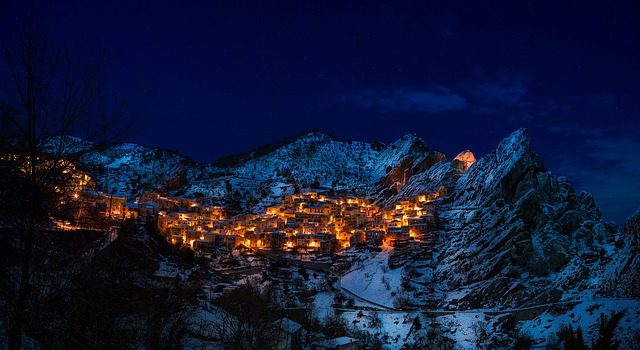
Italy is one of Europe’s most interesting hockey countries because the sport has never been evenly spread across the whole country. Italian hockey is strongest in the north, especially in the Alpine and Dolomite regions where winter sport, mountain towns, local clubs, and cross-border competition have shaped the game for generations. In cities such as Bolzano, Cortina d’Ampezzo, Asiago, Merano, Brunico, and the wider South Tyrol and Veneto hockey belt, the sport has a deeper local identity than it does in much of central or southern Italy.
Hockey in Italy is not a national mass-market sport on the level of football, cycling, basketball, or volleyball, but it has a serious organized structure, a long international history, and a recognizable place in European hockey. Italy has been an IIHF member since 1924, and the country’s hockey system includes men’s and women’s national teams, youth national teams, domestic leagues, women’s competition, junior categories, para ice hockey, and dozens of indoor and outdoor rinks. The IIHF lists Italy with 1,631 total players and 64 full-size indoor rinks, which reflects a sport that is smaller than Italy’s mainstream sports but much more developed than a casual niche.
The History of Hockey in Italy
The history of hockey in Italy is closely tied to northern Italy’s geography. The sport developed most naturally in mountain communities where cold winters, outdoor ice, and winter tourism already made skating part of local life. Unlike countries where hockey became a broad national pastime, Italian hockey grew first as a regional sport, with its deepest roots in the Alps and Dolomites.
Italy joined the International Ice Hockey Federation in 1924, placing the country among the earlier European nations to formalize its connection to international hockey. That date matters because it shows that Italian hockey is not a recent experiment or a modern import built only around Olympic visibility. The country has had an organized hockey identity for roughly a century, even if the sport’s audience and player base have remained concentrated.
The strongest historical centers have often been in places where Italian, German-speaking, Austrian, and broader Central European sporting cultures overlap. South Tyrol is especially important. Bolzano, known in German as Bozen, has long been one of the most important hockey cities in the country. That cross-border cultural setting helped Italian hockey develop with a different rhythm from sports centered in Rome, Naples, Florence, or the football-heavy industrial cities of the south.
Cortina d’Ampezzo is another major historical name. Its Olympic legacy, winter-sport identity, and mountain setting gave hockey a natural home. Asiago, Val Gardena, Merano, Renon/Ritten, Val Pusteria, Fassa, and other northern clubs also helped form the backbone of the Italian game. These towns and valleys matter because Italian hockey has often been carried by club loyalty and regional tradition rather than by national television exposure.
The domestic game has gone through multiple league structures over time, including the historic Serie A framework and later arrangements involving the Alps Hockey League. That shift reflects the reality of Italian hockey: the sport is strong enough to support serious clubs, but it also benefits from cross-border competition with nearby hockey countries. Playing against Austrian, Slovenian, and other regional clubs has helped Italian teams maintain a higher competitive standard than a purely domestic structure might allow.
Italy’s national team history has also been shaped by movement between levels of international hockey. The men’s national team has competed in top-level World Championship play at various points, while also spending time in Division I competition. That pattern places Italy in the European middle tier: not among the permanent giants like Canada, Sweden, Finland, Czechia, or the United States, but far above countries where ice hockey is just beginning.
Where Hockey Fits in Italian Sports Culture
Hockey occupies a specific but meaningful place in Italian sports culture. It is not a nationwide obsession, and it does not compete with football for everyday attention across the country. Its importance is instead regional, seasonal, and community-based. In northern Italy, especially in Alpine towns, hockey can feel like a genuine local institution. In much of the rest of Italy, it is more likely to be seen as a winter sport, an Olympic sport, or a specialized club activity.
That regional divide is central to understanding hockey in Italy. In many northern communities, hockey is tied to place. Local clubs are not just sporting teams; they are part of the winter calendar and civic identity. A club in Bolzano, Asiago, Cortina, Merano, or Brunico can carry family loyalty, town pride, and long-running rivalries. In these areas, hockey has a cultural weight that would not be obvious from national media coverage alone.
The South Tyrol region gives Italian hockey one of its distinctive characteristics. Because the area has strong linguistic and cultural connections to the German-speaking Alpine world, hockey there often feels closer to Austrian, Swiss, or Central European sport culture than to the mainstream Italian sporting imagination. That does not make it less Italian; it makes Italian hockey more layered. It is Italian, Alpine, regional, and cross-border all at once.
In larger cities, hockey’s position is more complicated. Milan has hockey history and fan potential, but the sport has repeatedly faced infrastructure and continuity problems there. The 2026 Milano Cortina Winter Olympics brought major attention to ice sports in Milan, but the long-term question is whether Olympic interest can be converted into permanent facilities, youth programs, and a professional club presence. After the Games, Milan officials discussed plans for a new permanent 5,000-seat ice arena and a possible professional hockey team, partly because the Olympic hockey venues were set to be repurposed rather than kept as permanent hockey homes.
Italy’s hockey culture is also helped by the country’s broader winter-sport identity. Skiing, skating, biathlon, and other winter disciplines are more visible in northern regions than in the national sporting mainstream, but they create an environment where hockey feels less foreign. When Italian audiences watch the Winter Olympics or follow local winter-sport athletes, hockey can benefit from the same seasonal attention.
Still, the sport faces structural limits. Hockey requires rinks, equipment, coaching, travel, and a player base large enough to sustain age-group competition. Those barriers are significant in a country where many children can play football, basketball, volleyball, or cycling with fewer facility constraints. That is why hockey in Italy remains serious but concentrated: it has real infrastructure, real history, and real clubs, but not the national saturation of Italy’s biggest sports.
Hockey Teams, Leagues, and Competitions in Italy
Organized hockey in Italy is built around a layered structure that includes senior men’s competition, women’s hockey, youth leagues, national teams, cups, and cross-border play. The official Italia Hockey portal lists competitions and categories including IHL Serie A, IHL, IHL Division I, IHL Women, Under 19, Under 16, Under 14, the Supercoppa, Coppa Italia, para ice hockey, and multiple national team categories.
The top end of Italian club hockey is closely connected to the Alps Hockey League and the IHL Serie A framework. This structure reflects the practical geography of the sport. Northern Italy sits close to Austria, Slovenia, Switzerland, and other hockey-playing regions, so Italian clubs can benefit from regular competition beyond national borders. For a country with a concentrated player base, this is important. Cross-border competition gives top Italian clubs a stronger schedule and helps keep the domestic game connected to the wider European hockey ecosystem.
HC Bolzano is the most internationally recognized Italian club. The club has been one of the country’s dominant hockey institutions and has also competed beyond Italy’s borders, including in the multinational ICE Hockey League. Bolzano’s importance goes beyond trophies. It represents the high end of Italian club ambition: a team from an Italian city with deep Alpine hockey roots competing in a broader Central European hockey structure.
Asiago is another essential name in Italian hockey. The club has been one of the country’s strongest hockey communities and has produced a model of sustained local importance. Asiago’s hockey identity is tied to the town itself, which is part of why Italian hockey cannot be understood only through major cities. Some of the most important hockey places in Italy are smaller communities where the rink and the club occupy a central role.
Cortina also carries historical weight. Cortina d’Ampezzo is one of Italy’s signature winter-sport towns, and its hockey tradition is part of a broader Olympic and mountain-sport identity. Merano, Renon/Ritten, Val Pusteria, Val Gardena, Fassa, Vipiteno, and other northern clubs help fill out the competitive map. These teams give Italian hockey its regional density, especially in South Tyrol, Veneto, and nearby Alpine areas.
The Coppa Italia and Supercoppa give the domestic calendar additional competitive markers. These competitions matter because they create national stakes within a system where some clubs may also be looking outward toward multinational league play. For fans, they help preserve the Italian hockey calendar and keep domestic rivalries meaningful.
Women’s hockey is also part of the organized structure. Italy has a senior women’s national team and domestic women’s competition, and the IIHF ranks Italy’s women’s program inside the global structure. The women’s game is smaller than the men’s game, but it is an important part of Italy’s long-term hockey development. The IIHF lists Italy with 94 senior female players and 77 youth female players, showing that the women’s side has a base but still has considerable room to grow.
Youth categories are especially important because Italian hockey cannot rely only on importing players or maintaining old club traditions. The presence of Under 19, Under 16, and Under 14 competition gives the sport a developmental ladder. For a country in Italy’s position, that ladder is the difference between having historic clubs and having a sustainable hockey system.
Famous Hockey Players from Italy
Italy has produced and developed a range of important hockey players, though its player history looks different from that of the sport’s biggest global powers. The country has had NHL-connected players, European professionals, domestic stars, national team leaders, and players from Italian hockey families whose importance is felt most strongly inside the European game.
One of the best-known Italian-born hockey names is Luca Sbisa, who was born in Ozieri, Sardinia, and developed in Switzerland before reaching the NHL. His career is a useful example of how nationality, birthplace, and hockey development can be complicated in European hockey. He is connected to Italy by birth, but his elite hockey pathway ran through Switzerland. That distinction matters because Italy has not historically produced large numbers of NHL players through a purely domestic development route.
The Italian national team has often relied on a mix of domestic players, Italian-trained players, and players with North American or international backgrounds eligible to represent Italy. This has been common in many European hockey countries outside the top tier. It does not erase the domestic game; rather, it reflects the competitive challenge of building a national team from a smaller player pool while trying to remain relevant internationally.
Within Italian club hockey, many important figures are better known to domestic and European fans than to NHL audiences. Players from Bolzano, Asiago, Cortina, Merano, Val Pusteria, and other northern clubs have helped define the national team across generations. Their importance comes from sustaining Italian hockey’s competitive identity, winning domestic titles, representing Italy internationally, and keeping club traditions alive.
Italian hockey has also had influential coaches, administrators, and club builders. In smaller hockey countries, these figures can be as important as star players. A successful club president, youth coach, federation leader, or national team coach can shape the sport’s direction for decades. Italy’s continued IIHF presence, youth structure, and Olympic visibility are not only the product of players on the ice; they are also the result of institutional work behind the scenes.
For an Italy hockey page, the “famous players” section should not be written as though Italy is Canada, Sweden, Finland, or Czechia. The better framing is that Italian hockey has produced notable players and national team figures within a regional European hockey system. The country’s most important hockey names are often tied to club loyalty, international duty, and the survival of a serious hockey culture in a football-dominated sporting nation.
Youth Hockey and Player Development in Italy
Youth hockey in Italy is the most important piece of the country’s long-term hockey future. The senior national team and top clubs can only remain competitive if young players have enough access to rinks, coaching, games, and development pathways. Italy’s player base is not huge, so the quality of youth development matters as much as the raw number of players.
The IIHF lists Italy with 468 youth male players and 77 youth female players, which shows both the existence of a youth pipeline and the limitations of scale. Italy has enough youth hockey to support age-group competition and national youth teams, but the player pool is small compared with major hockey nations. That makes retention important. Every youth club, rink, coach, and family matters more in a system where the sport cannot afford to lose large numbers of players at each age level.
Geography plays a major role in development. A child growing up near Bolzano, Asiago, Cortina, Merano, Brunico, or another northern hockey center is much more likely to encounter the sport early than a child in Rome, Naples, Bari, Palermo, or much of central and southern Italy. That creates an uneven national map. Italy has real hockey infrastructure, but it is not evenly distributed.
Rink access is one of the sport’s central issues. Hockey requires ice time, and ice time is expensive. In communities where rinks are established and clubs are stable, young players can enter the sport through local programs. In areas without reliable rink access, hockey becomes much harder to sustain. This is one reason the post-Olympic discussion around Milan matters. A major permanent ice facility in Milan could support grassroots activity, professional ambition, and broader visibility in one of Italy’s most important urban markets. Reuters reported that the proposed Milan arena was envisioned not only for elite events but also as a hub for grassroots ice sports.
Italy’s youth categories help organize the pathway. Under 14, Under 16, and Under 19 competitions give players age-appropriate steps before senior hockey. Youth national teams also give top players international exposure, which is especially valuable for a country trying to maintain its place in the European middle tier. The official Italian hockey structure includes national teams from senior level down through multiple youth categories, including Under 20, Under 18, Under 17, Under 16, and Under 15 listings on the Italia Hockey portal.
Girls’ hockey is another area with growth potential. Italy has a women’s national team structure and domestic women’s competition, but the female player base remains modest. Building girls’ hockey requires more than simply adding teams. It requires recruiting, coaching, ice time, visibility, and clear pathways from youth hockey into senior competition. If Italy can strengthen girls’ participation, the overall hockey ecosystem becomes deeper and more sustainable.
The Italian development challenge is not that the country lacks hockey tradition. It has tradition. The challenge is scale. Italy needs enough young players, enough trained coaches, enough affordable ice time, and enough competitive games to keep its best players improving. In the strongest hockey towns, that system already exists in meaningful form. The larger question is whether the sport can expand its development base beyond its traditional northern centers.
The Future of Hockey in Italy
The future of hockey in Italy depends on how well the country converts tradition, Olympic visibility, and regional strength into broader development. The sport already has a century of organized history, established northern clubs, national teams, women’s competition, youth categories, and a recognizable place in European hockey. That gives Italy a stronger foundation than many countries where hockey is still mostly experimental.
The main opportunity is infrastructure. If Milan and other major cities can support permanent ice facilities, hockey could gain a stronger urban platform without losing its Alpine identity. A professional Milan team, stronger youth programming, and more grassroots ice access would help connect Italy’s traditional hockey regions with a larger national audience.
The main challenge is participation. Italy does not need to become a hockey superpower for the sport to matter. It needs stable clubs, better youth retention, stronger women’s development, competitive domestic and cross-border leagues, and enough rinks to make the sport accessible. Italian hockey is at its best when it combines mountain-town loyalty, European competition, and national team ambition. That combination gives the sport a clear identity: smaller than Italy’s biggest sports, but historic, organized, and deeply rooted in the places where hockey has always mattered most.

Interested in Sports in Italy?
American Football in Italy | Baseball in Italy | Basketball in Italy | Cricket in Italy | Football (Soccer) in Italy | Rugby in Italy