Dutch ice hockey’s top historical/professional geography includes places such as Tilburg, Heerenveen, Geleen, The Hague, Eindhoven and Nijmegen, while the country’s field hockey culture is especially concentrated around major Randstad, Brabant and central Dutch club hubs.
Hockey in the Netherlands means two very different things depending on the surface. On ice, the Netherlands has a modest but organized hockey culture, with a national federation, domestic clubs, indoor rinks, and men’s and women’s national teams that compete within the international ice hockey system. On grass or turf, however, the Netherlands is one of the great hockey nations in the world. Dutch field hockey is not a niche sport. It is a national sporting institution, a major Olympic force, a club-based powerhouse, and one of the clearest examples of how deeply a country can build hockey into schools, communities, elite development, and international identity.
That makes the Netherlands one of the most interesting countries for a worldwide hockey site. It is not a major ice hockey nation in the same way Canada, Sweden, Finland, Czechia, Slovakia, Switzerland, Germany, or the United States are. But if “hockey” is understood globally to include field hockey, the Netherlands belongs in the very top tier. The Dutch women’s field hockey team has long been one of the sport’s dominant national teams, and the Dutch men’s program is also among the world’s elite. In 2026 FIH ranking updates, the Netherlands led the women’s standings and was also at or near the very top of the men’s world rankings.
So the Dutch hockey story has to be written with balance. Ice hockey in the Netherlands is real, organized, and historically rooted. Field hockey in the Netherlands is elite, visible, and culturally much larger. Together, they create a national hockey profile that is broader than a simple “winter sport” story.
The History of Hockey in the Netherlands
The history of hockey in the Netherlands is strongest when viewed through field hockey. Field hockey became deeply established in Dutch sporting life through clubs, schools, regional associations, and national-team competition. Over time, the Netherlands built one of the world’s most advanced hockey cultures: technically skilled, tactically organized, and supported by a strong domestic club system. Dutch field hockey has been especially powerful because it does not rely only on national-team success. The sport has roots in everyday participation, local clubs, youth development, coaching systems, and a high-performance structure that connects community hockey to elite international competition.
Dutch field hockey grew into a sport associated with skill, spacing, passing, pressing, and technical control. The Netherlands became one of the countries that helped define modern field hockey as a fast, tactical, possession-based game. The women’s national team became a dominant force across Olympic Games, World Cups, European Championships, and international ranking cycles. The men’s national team also built a strong global reputation, making the Netherlands one of the rare countries where both the men’s and women’s field hockey programs carry major international weight.
Ice hockey has a different history in the Netherlands. It developed as a smaller winter and indoor sport, organized through clubs and the national federation. IJshockey Nederland is the governing body for ice hockey in the country, and the Netherlands is a full member of the International Ice Hockey Federation. The IIHF lists the Netherlands with 20 indoor IIHF-size rinks, more than 1,600 senior male players, 957 youth male players, and 487 senior female players in its member profile.
Dutch ice hockey’s older domestic structure included the Eredivisie, which functioned as the country’s top ice hockey league for decades. The Eredivisie was founded after World War II and later became the highest level of competition organized by the Dutch ice hockey federation. In 2015, after financial pressures affected several teams and Tilburg Trappers moved into Germany’s Oberliga, the old Eredivisie structure was suspended and remaining teams shifted into the BeNe League framework.
That split between field hockey strength and ice hockey modesty is central to understanding hockey in the Netherlands. The country has two hockey stories: one where it is a global giant, and one where it is a smaller European participant with a real but limited domestic base.
Where Hockey Fits in Dutch Sports Culture
Hockey in Dutch sports culture is primarily a field hockey story. In the Netherlands, field hockey has a level of visibility, organization, and social familiarity that ice hockey does not match. Football remains the country’s dominant sport, but field hockey has long held a respected place in Dutch athletic life. It is associated with clubs, schools, youth development, strong women’s participation, Olympic success, and a high standard of technical coaching.
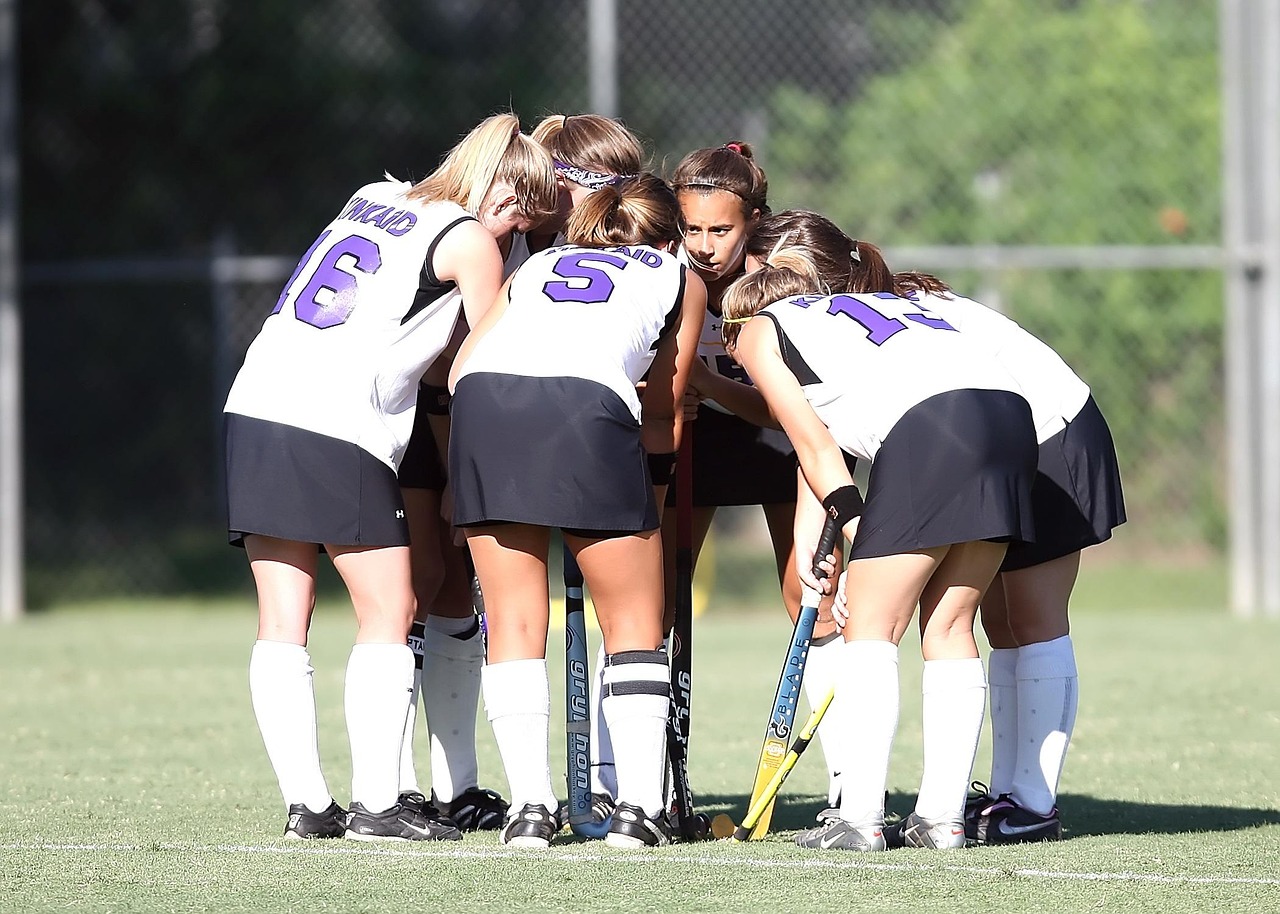
Dutch field hockey is not merely a sport played by elite national-team athletes. It is a club culture. Local hockey clubs matter because they form the base of the entire system. Children learn the game through organized clubs, develop technical skills early, and move through age-group structures that connect participation with competition. This club structure is one reason the Netherlands has been able to produce elite teams consistently across generations.
The women’s side is especially important. Dutch women’s field hockey has become one of the strongest national programs in any team sport. The Netherlands’ women are not just successful; they are often the standard against which other international teams are measured. Their success gives Dutch hockey a powerful identity built around excellence, depth, and expectation.
Men’s field hockey also has a major place in the Dutch sporting landscape. The Dutch men have been Olympic, World Cup, European, and ranking contenders across multiple eras. Their presence keeps field hockey from being framed only as a women’s sport in the Netherlands. Unlike the United States, where field hockey is culturally associated mostly with girls’ and women’s school and college sport, Dutch field hockey is a serious men’s and women’s sport.
Ice hockey occupies a smaller but still meaningful position. It is not central to Dutch national sports culture, partly because the Netherlands is more famous in winter sport for speed skating than for ice hockey. Dutch winter-sport identity is dominated by the ice oval rather than the ice rink. But ice hockey still has loyal communities, especially around established clubs and rinks. For fans in Tilburg, Heerenveen, The Hague, Amsterdam-area communities, and other hockey centers, ice hockey is more than a marginal curiosity. It is a real club sport with local history.
The result is a country where the word “hockey” can carry different meanings. For many Dutch and international sports fans, hockey means field hockey first. For ice hockey followers, the Netherlands has its own smaller but persistent rink-based culture. A strong landing page should make that distinction clear instead of treating all hockey as one uniform tradition.
Hockey Teams, Leagues, and Competitions in the Netherlands
The Netherlands has one of the world’s strongest field hockey systems, and much of that strength begins at club level. Dutch field hockey clubs serve as the backbone of the sport. They develop youth players, organize local competition, sustain adult teams, and feed elite national structures. The Dutch Hoofdklasse is widely regarded as one of the strongest domestic field hockey leagues in the world, drawing top Dutch and international players and helping maintain a high standard of competition.
The strength of the Dutch club system matters because field hockey is not built only around national-team windows. The domestic game gives players regular high-level competition and gives clubs a visible role in the sport’s identity. This is one reason the Netherlands can remain competitive across both men’s and women’s international field hockey. Talent does not appear suddenly at national-team level; it is developed through a deep network of clubs, coaches, youth programs, and elite domestic matches.
Internationally, the Netherlands is central to field hockey. The women’s national team has held the top position in FIH rankings, while the men’s team has also remained at the top end of the global game. The FIH’s 2026 ranking update listed the Dutch women first in the world, clearly ahead of Argentina, Belgium, China, and Spain, and separate FIH rankings data placed the Dutch men at the top of the men’s table.
The Netherlands has also become a major host and partner in international field hockey. Belgium and the Netherlands are connected to the 2026 FIH Hockey World Cup, reinforcing the Low Countries’ central place in the modern field hockey map. Hosting and co-hosting major tournaments helps maintain the country’s visibility and strengthens the link between domestic hockey culture and the international game.
In ice hockey, the structure is smaller. Dutch ice hockey has been organized through IJshockey Nederland, and the old Eredivisie once served as the top domestic competition. After the Eredivisie’s suspension in 2015, the BeNe League became central to the top-level club structure involving Dutch and Belgian teams. Tilburg Trappers also became an important symbol of Dutch ice hockey ambition by competing in Germany’s Oberliga after leaving the Dutch top-flight structure.
The Dutch national ice hockey teams compete within the IIHF system rather than at the top level of the sport. That does not make them unimportant. It simply means the Netherlands’ ice hockey identity is built around development, domestic clubs, regional competition, and international participation outside the elite medal-contender group. For a country with only 20 IIHF-size indoor rinks listed by the IIHF, maintaining organized ice hockey is itself a significant sporting infrastructure achievement.
Famous Hockey Players from the Netherlands
The most famous Dutch hockey players are overwhelmingly field hockey players. Dutch field hockey has produced many of the sport’s defining athletes, particularly on the women’s side. Because the Netherlands has been so successful internationally, its best players are not just national stars; they are global field hockey figures.
Dutch women’s field hockey has been led by players known for technical excellence, penalty-corner quality, attacking intelligence, defensive organization, and tournament composure. The program’s strength is not limited to one golden generation. The Netherlands has repeatedly produced elite players capable of sustaining the country’s place at the top of the sport. That continuity is part of what separates Dutch hockey from countries that rise briefly and then fade.
The men’s side has also produced major international figures. Dutch men’s field hockey has long been associated with creativity, technical control, and high-level tactical execution. The best Dutch male players have helped shape the international reputation of the Netherlands as a country that plays skillful, structured, and modern hockey.
In ice hockey, the list of internationally famous Dutch players is much smaller. The Netherlands has produced players who have competed in domestic European leagues, represented the national team, and contributed to Dutch club hockey, but it has not produced the same volume of NHL or top-tier international stars as the major ice hockey nations. That difference should not be hidden. It is part of the honest profile of hockey in the Netherlands.
A strong Dutch hockey page should therefore avoid forcing ice hockey and field hockey into the same level of global fame. Dutch field hockey players belong in any serious discussion of world hockey excellence. Dutch ice hockey players are better understood through domestic clubs, national-team service, and the persistence of a smaller hockey community.
The women’s field hockey program deserves special emphasis because it is one of the most successful national teams in the world. At the 2024 Paris Olympics, the Dutch women retained their Olympic title by defeating China in a shootout, completing a Dutch Olympic field hockey double after the men had won gold the previous day. Reuters described the result as the Netherlands retaining the women’s title and securing a double gold after the men’s triumph.
That kind of achievement shows why “Hockey in the Netherlands” has to be broader than ice hockey. If the page ignores field hockey, it misses the most important Dutch hockey story.
Youth Hockey and Player Development in the Netherlands
Youth hockey development in the Netherlands depends heavily on which form of hockey is being discussed. In field hockey, the youth system is one of the country’s greatest strengths. Dutch clubs introduce children to the sport early, provide regular coaching, and create competitive pathways that can carry players from local participation to elite domestic leagues and national teams. The density and quality of the club structure help explain why the Netherlands remains so strong internationally.
Field hockey in the Netherlands benefits from a culture where the sport is visible and socially established. Young players can see a clear path: club hockey, age-group development, domestic competition, elite club play, and potential national-team selection. This kind of continuity matters. It gives players not only technical training but also an understanding of how the game should be played.
The Dutch field hockey system is also important for girls and women. In many countries, women’s team sports have had to fight for basic visibility. In the Netherlands, women’s field hockey has long had elite status, strong role models, and a national team that young players can realistically recognize as one of the best in the world. That makes the women’s development pathway unusually powerful.
Ice hockey development is more constrained. The IIHF lists the Netherlands with 957 youth male players and no listed youth female players in the current member profile, along with 487 senior female players and 20 indoor IIHF-size rinks. Those numbers show a sport that exists but has a much smaller base than the country’s field hockey system.
Rink access is the central limitation for Dutch ice hockey. Field hockey can be supported by outdoor and turf-based club infrastructure. Ice hockey requires indoor rinks, specialized equipment, ice time, and a more expensive development environment. That naturally reduces the number of players and makes the sport more dependent on specific cities, clubs, and facilities.
Still, Dutch ice hockey has a development role. Youth programs, club teams, and national-team structures give players a pathway into the sport. The challenge is scale. The Netherlands can sustain ice hockey, but it does not have the same rink density or cultural demand as countries where ice hockey is a central winter sport. Its future growth depends on making the sport accessible, maintaining facilities, and connecting youth programs to visible senior-level competition.
The Future of Hockey in the Netherlands
The future of hockey in the Netherlands is strongest on the field. Dutch field hockey already sits at the top of the world game, and the next challenge is maintaining that level across both men’s and women’s programs. The country has the club culture, coaching base, youth participation, and national-team tradition to remain a global field hockey power. For Dutch field hockey, the issue is not whether the sport matters. It is whether the Netherlands can keep refreshing its talent pipeline while other countries invest more heavily.
Ice hockey’s future is more modest but still meaningful. The Netherlands has organized clubs, national teams, indoor rinks, and a place in the IIHF system. The sport’s growth will depend on rink access, youth recruitment, women’s development, domestic competition stability, and cross-border opportunities with Belgium and Germany. Dutch ice hockey does not need to become Dutch field hockey to be successful. It needs to sustain a clear identity as a smaller European ice hockey country with loyal local communities.
Hockey in the Netherlands is therefore a two-track story. In field hockey, the Netherlands is one of the world’s great powers. In ice hockey, it is a committed participant with a smaller but real sporting culture. Together, those tracks make the Netherlands one of the most important countries to cover carefully on any global hockey site, because the country proves that hockey’s meaning changes dramatically depending on where it is played, how it is organized, and which version of the sport a culture chooses to make its own.








Interested in Sports in Netherlands?
American Football in Netherlands | Baseball in Netherlands | Basketball in Netherlands | Cricket in Netherlands | Football (Soccer) in Netherlands | Rugby in Netherlands