Hockey in North Dakota is not just a college-sports story. It is a layered ice-hockey culture built around the University of North Dakota in Grand Forks, high school hockey in Fargo and the Red River Valley, junior hockey in Bismarck and Minot, community rinks across the prairie, and Olympic-level women’s hockey through figures like Jocelyne and Monique Lamoureux. UND’s hockey roots go back to campus play in 1929–30, with 1946–47 treated as the first organized season with results and statistics; the program’s modern identity is anchored by Ralph Engelstad Arena in Grand Forks.
Hockey in North Dakota is one of the clearest examples of how a small population can produce an outsized hockey culture. The state does not have an NHL team, and it does not have the population scale of Minnesota, Michigan, Massachusetts, Ontario, or Quebec. But North Dakota has something just as important: a deep rink culture, a powerful college hockey identity, a serious high school hockey scene, and one of the most recognizable college programs in the sport.
At the center of North Dakota hockey is the University of North Dakota in Grand Forks. UND officially started its men’s hockey program for the 1946–47 academic year, though the school’s hockey roots go back earlier, and the program has become one of the defining institutions in American college hockey.
North Dakota hockey is built around Grand Forks, Fargo, Bismarck, Minot, youth associations, high school rivalries, community arenas, and the constant pull of UND. It is a cold-weather hockey state, but its hockey identity is not just about climate. It is about institutional pride, local rinks, player development, and the way one college program can become the state’s most important hockey brand.
The History of Hockey in North Dakota
Hockey in North Dakota developed through the same forces that shaped much of the northern plains game: cold winters, community rinks, school programs, Canadian influence, Minnesota proximity, and local enthusiasm for winter sports. The state’s geography matters. North Dakota sits on the Canadian border, next to Minnesota, and in a region where outdoor ice and winter recreation have long been part of community life. That made hockey a natural fit, even if the state’s smaller population meant the sport developed through concentrated local centers rather than a huge statewide system.
Grand Forks became the most important city in North Dakota hockey because of the University of North Dakota. UND’s official men’s hockey history dates the formal start of the program to the 1946–47 academic year, while noting earlier hockey history at the school dating back to the 1920s. From there, the program grew into one of the great powers of NCAA hockey, with championship tradition, elite players, major rivalries, and one of the strongest home-ice environments in the country.
High school hockey also became important to the state’s hockey identity. North Dakota does not have the same number of teams as larger hockey states, but its high school hockey culture is serious and competitive. Grand Forks Central, Grand Forks Red River, Fargo-area programs, Bismarck-area programs, Minot, Jamestown, and others have helped make the high school game part of the state’s winter calendar. The North Dakota High School Activities Association runs boys’ and girls’ hockey state tournaments, with the 2026 boys’ state tournament scheduled for Scheels Arena in Fargo as an eight-team single-elimination event with consolation play.
The history of hockey in North Dakota is therefore not a professional-franchise story. It is a college-and-community story. UND gave the state national visibility. High school programs gave the sport local roots. Youth hockey and community rinks connected the game to families. That combination made hockey one of the few sports where North Dakota can punch far above its population weight.
Where Hockey Fits in North Dakota Sports Culture
Hockey in North Dakota is not just a sport that happens to be played in the state. It is one of the state’s strongest athletic identities. Football, basketball, wrestling, baseball, and other sports all matter in North Dakota, but hockey has a special place because it connects the state to a national college sports stage. UND hockey gives North Dakota a brand that travels far beyond the state’s borders.
In many places, college hockey is a niche sport. In Grand Forks, it is a central civic institution. UND hockey is not simply a university team with a local following; it is a statewide symbol. Games at Ralph Engelstad Arena are part of the state’s sports culture, and the program’s history gives North Dakota a connection to the highest level of American college hockey. UND has sent more than 100 players to the professional ranks and produced nearly 50 first-team All-Americans, according to a 2026 UND Today feature on the program’s cultural history.
North Dakota’s hockey culture is also shaped by its size. In a smaller state, a major program can dominate the sports imagination in a way that might be harder in a larger market. UND hockey benefits from that concentration. It does not have to compete with an NHL team inside the state. It does not have to share the hockey conversation with multiple Division I programs. The result is a rare kind of focus: one college program sits at the top of the state’s hockey pyramid.
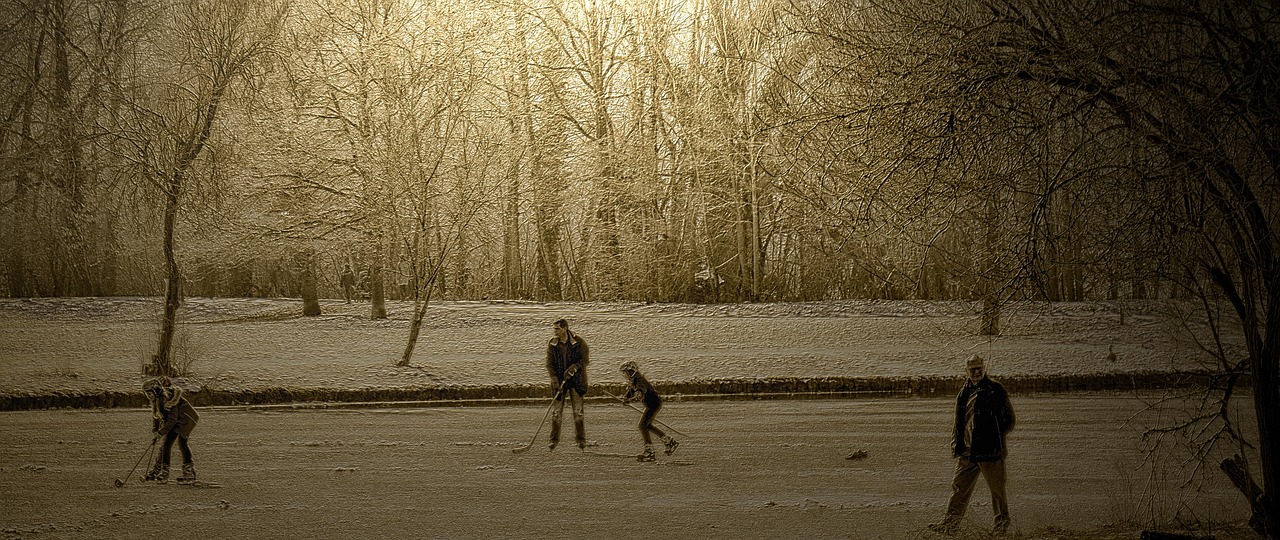
The sport also fits naturally into local winter life. North Dakota’s climate supports the emotional logic of hockey, even when organized participation depends on indoor rinks. The winter calendar, school sports, travel routines, and small-city rivalries all give the sport a strong regional identity. Hockey is strongest in places with established arenas and associations, especially Grand Forks and Fargo, but the sport’s reach extends through Bismarck, Minot, Jamestown, West Fargo, and other communities.
North Dakota hockey also has a cross-border and regional quality. It is shaped by Minnesota, Manitoba, Saskatchewan, and the broader northern plains. Grand Forks sits close to East Grand Forks, Minnesota, and the Red River Valley has long been part of the state’s hockey ecosystem. UND’s own cultural history points to players from Grand Forks, East Grand Forks, the northern Red River Valley, northwestern Minnesota, and Canada as part of the program’s foundation.
Teams, Leagues, and Hockey Institutions in North Dakota
The most important hockey institution in North Dakota is the University of North Dakota men’s hockey program. UND is one of the signature programs in NCAA Division I men’s hockey, with a history that includes national championships, Frozen Four appearances, All-Americans, NHL players, Olympic players, and some of the sport’s most intense college rivalries. The program’s official history identifies its formal start in 1946–47 and places it within a longer hockey tradition that reaches back to earlier decades.
UND hockey gives North Dakota a national hockey presence. The program has long competed against other major college powers and has helped define the upper tier of American college hockey. Its rivalries with programs such as Minnesota, Denver, Wisconsin, and others have given the state a direct connection to the broader culture of NCAA hockey. For many fans, North Dakota hockey means UND first because the program is the state’s most visible and successful hockey institution.
High school hockey is the second major layer. The North Dakota High School Activities Association organizes boys’ and girls’ hockey competition, including state tournaments that bring the state’s top programs together. The 2026 NDHSAA boys’ hockey tournament was set for Scheels Arena in Fargo, reflecting the importance of Fargo as one of the state’s major hockey centers.
Grand Forks high school hockey has been especially important. Grand Forks Central and Grand Forks Red River are two of the state’s best-known programs, and their rivalry gives local hockey a strong school-based identity. In 2026, Grand Forks Central defeated Grand Forks Red River 5–2 to win back-to-back boys’ state championships, according to North Dakota high school hockey coverage.
Fargo is another key hockey center. Scheels Arena serves as a major event venue and has hosted state tournament play. Fargo-area schools and youth programs give eastern North Dakota another strong hockey base beyond Grand Forks. Bismarck and Minot add western and central presence, helping make the state’s hockey map broader than one university town.
North Dakota does not need an NHL, AHL, or ECHL team to have a serious hockey ecosystem. Its structure is different. The state’s hockey institutions are built around NCAA hockey, high school hockey, youth associations, community arenas, and recreational leagues. That makes it a development-and-culture state rather than a professional-market state.
The result is a hockey ecosystem with a clear hierarchy. UND is the flagship. High school hockey provides local pride. Youth associations build the next generation. Community rinks keep the sport present in everyday life. Together, those layers give North Dakota one of the most recognizable hockey identities of any small-population state in the United States.
Famous Hockey Players from North Dakota
North Dakota’s player story has two layers: players born in the state and players developed through the University of North Dakota. The state itself has produced NHL players, but the UND pipeline is much larger and gives North Dakota a national and international hockey footprint far beyond its population size.
Among players born in North Dakota, the list is smaller than in neighboring Minnesota, but still meaningful. North Dakota-born players who have reached the NHL include names such as Matt Greene, a Grand Ledge-born defenseman often associated with Grand Forks and UND development, and other players connected to the state’s hockey communities. Statistical databases track all-time NHL players born in North Dakota, showing the state’s direct contribution to the NHL player pool.
The bigger story is UND. The University of North Dakota has developed a long list of NHL and international players. The program’s alumni have included Zach Parise, Jonathan Toews, T. J. Oshie, Brock Boeser, Travis Zajac, Ed Belfour, James Patrick, Jason Blake, Dave Christian, Troy Murray, Matt Greene, Jake Sanderson, and many others. UND’s own history highlights names such as Zach Parise, Jonathan Toews, and Chay Genoway as part of the program’s modern identity.
This distinction matters. A state page should not only ask who was born there. North Dakota’s hockey impact comes from who played there, developed there, and became associated with the state through UND. College hockey allows a place to shape players who were born elsewhere but became part of the local hockey story.
UND’s alumni record is deep enough that College Hockey News tracks North Dakota alumni in the NHL, including players such as Jason Blake, Drake Caggiula, Jacob Bernard-Docker, Brad Berry, Brandon Bochenski, and many others across different eras.
North Dakota hockey figures also include coaches, builders, and college hockey leaders. The state’s hockey reputation has been shaped not only by players but by the people who built programs, maintained rinks, coached youth teams, and turned UND into a national power. In a state this small, hockey success depends on institutions as much as individuals.
Youth Hockey and Player Development in North Dakota
Youth hockey in North Dakota is shaped by rinks, distance, school pride, and the presence of a major college program. The state’s population is spread out, which means hockey development is not as dense as it is in Minnesota or Massachusetts. Players and families often have to travel for higher-level competition, and the number of elite teams is limited by geography. But the state’s hockey culture is serious, and the communities that support the sport tend to support it deeply.
Grand Forks is the strongest youth hockey center because the sport is embedded into the city’s identity. UND hockey gives young players a visible model, while local high school programs and youth associations create a pathway from childhood participation to competitive school hockey. A young player in Grand Forks grows up with the sport all around them: UND games, local rinks, school rivalries, and a constant awareness that hockey matters in the city.
Fargo has also become a major development center. Its larger metro population, rink infrastructure, and state tournament presence make it one of North Dakota’s most important hockey communities. Fargo-area players have access to a deeper pool of teams and competition than many smaller parts of the state, and the city helps connect North Dakota hockey to the broader Upper Midwest.
Bismarck, Minot, Jamestown, West Fargo, and other communities add important depth. In these places, hockey depends on local commitment. Rinks, volunteer coaches, parents, school programs, and youth associations carry the sport. The player pool may be smaller, but the connection between local hockey and community identity can be strong.
For elite players, North Dakota’s pathway often requires movement. A player may start in a local youth association, compete in high school hockey, move into junior hockey, pursue NCAA opportunities, or leave the state for stronger competition. That is common in smaller hockey states. The key is whether the local base is strong enough to get players started and keep them improving.
UND’s presence raises the ceiling of the entire state. Even players who never reach the college level grow up around an elite hockey standard. That matters for coaching, ambition, and local culture. North Dakota’s youth hockey system is not the largest in the country, but it benefits from being connected to one of the most important college hockey programs in the United States.
Women’s and Girls’ Hockey in North Dakota
Women’s and girls’ hockey in North Dakota has a meaningful place in the state’s hockey ecosystem, but its story is more complicated than the men’s side. Girls’ high school hockey exists as an organized state championship sport, and the NDHSAA has held girls’ hockey state tournament events alongside boys’ competition. In 2026, the NDHSAA girls’ hockey state tournament was scheduled for February 26–28 at Scheels Arena in Fargo, with television and streaming coverage by WDAY.
That high school structure matters because girls’ hockey needs visible competition to grow. In states where the boys’ game has long been more prominent, girls’ hockey often depends on dedicated programs, local role models, and enough teams to create a real competitive calendar. North Dakota has those building blocks, though the depth is still smaller than in larger hockey states.
The biggest institutional loss was the University of North Dakota women’s hockey program, which was discontinued in 2017. That decision removed the state’s most visible NCAA women’s hockey platform and changed the top end of the local pathway. Without a Division I women’s college program at UND, elite female players from North Dakota have to look elsewhere for that level of opportunity.
Still, girls’ hockey in the state remains important. High school programs, youth associations, and local rink communities continue to provide entry points. The growth of women’s hockey nationally, including the rise of professional women’s hockey and continued U.S.-Canada international visibility, gives young players more models than previous generations had.
For North Dakota, the long-term question is whether girls’ hockey can keep building depth without a major in-state NCAA women’s program. The base exists. The next step is broader participation, stronger development pathways, and more visibility for female players across the state.
Hockey Rinks, Communities, and Local Geography in North Dakota
The hockey map of North Dakota is not evenly distributed. Grand Forks is the state’s hockey capital because of UND, Ralph Engelstad Arena, high school tradition, and the city’s overall connection to the sport. Fargo is the state’s largest metro area and an important hockey center through youth programs, school teams, Scheels Arena, and state tournament hosting. Bismarck, Minot, Jamestown, West Fargo, and other communities give the sport additional reach.
North Dakota’s geography shapes its hockey culture. The state has long winters, but distance matters. A youth player in a smaller community may have a very different hockey experience from a player in Grand Forks or Fargo. Travel can be a major part of the sport. Games, tournaments, camps, and higher-level competition may require long drives, especially for families outside the main hockey centers.
That geography also creates tight local hockey communities. In smaller places, the rink can be one of the most important winter gathering spots. Hockey depends on volunteers, local associations, school support, and families willing to invest time and money. When those pieces are in place, the sport can survive and thrive even with a small player pool.
The Red River Valley is especially important. Grand Forks, East Grand Forks, Fargo, and the connection to Minnesota create a regional hockey corridor that extends beyond state borders. UND’s cultural history points directly to that regional foundation, including players from Grand Forks, East Grand Forks, the northern Red River Valley, northwestern Minnesota, and Canada.
North Dakota hockey is therefore both local and regional. It belongs to the state, but it is also part of a larger northern plains hockey belt.
The Future of Hockey in North Dakota
The future of hockey in North Dakota depends on maintaining the state’s strongest advantages: UND’s national power, high school hockey tradition, community rinks, youth associations, and local commitment. The state does not need to become a large professional hockey market to matter. Its identity is already clear.
The main challenges are access, cost, travel, and girls’ hockey development. Smaller player pools require strong local organization. Long distances make competition harder. Equipment and ice time can limit participation. The loss of UND women’s hockey also leaves a gap at the top of the female development pathway.
North Dakota’s hockey future is strongest if the state keeps its community base healthy while using UND’s visibility as a statewide asset. Hockey in North Dakota is not broad because of population scale. It is strong because the places that care about hockey care intensely. That is why the state remains one of the most important small-market hockey cultures in the United States.


Interested in Sports in North Dakota?
American Football in North Dakota | Baseball in North Dakota | Basketball in North Dakota | Cricket in North Dakota | Football (Soccer) in North Dakota | Rugby in North Dakota