Hockey in Pittsburgh is shaped by the Pittsburgh Penguins, but the city’s hockey identity is deeper than one NHL franchise. The Penguins give Pittsburgh its biggest hockey stage, its Stanley Cup memories, and its most visible connection to the sport. Around that franchise, the city has built a broader hockey culture through youth programs, suburban rinks, college club teams, adult leagues, and a fan base that treats hockey as part of the city’s major sports identity.
Pittsburgh is not a traditional pond-hockey city in the same way as Minneapolis, Boston, Detroit, or many Canadian communities. Its hockey culture is more closely tied to professional success, civic pride, and the way the Penguins turned the sport into a major winter presence in western Pennsylvania. The result is a city where hockey sits alongside football and baseball as part of Pittsburgh’s sports personality.
The Hockey Identity of Pittsburgh
Pittsburgh’s hockey identity is built around transformation. For much of its early NHL history, the Penguins were not one of the league’s glamour franchises. That changed through superstar eras, Stanley Cup runs, and a fan base that grew with the team. The arrival of Mario Lemieux gave Pittsburgh one of the greatest players in hockey history and changed the city’s relationship with the sport. Later, Sidney Crosby, Evgeni Malkin, Kris Letang, and Marc-Andre Fleury helped create another championship era.
That star-driven history matters because Pittsburgh hockey is not only about participation. It is about memory. Penguins fans connect the sport to specific eras: the Lemieux years, the early 1990s Stanley Cups, the uncertain years before the franchise stabilized, and the Crosby-Malkin period that brought three more Stanley Cups. The Penguins’ five Stanley Cup championships give the city a hockey mythology that many larger markets cannot match.
Pittsburgh also has a blue-collar sports identity that fits hockey well. The city values toughness, loyalty, and team success, and the Penguins have become part of that broader civic language.
Hockey Teams and Local Competitions in Pittsburgh
The Pittsburgh Penguins are the center of hockey in the city. The franchise entered the NHL during the league’s 1967 expansion and has become one of the most successful American teams of the modern era. The Penguins play at PPG Paints Arena, which anchors the city’s NHL experience and gives Pittsburgh its main hockey venue.
Before the Penguins became the city’s hockey symbol, Pittsburgh also had earlier hockey history. The Pittsburgh Hornets were an important minor league team, and the city had hockey roots before its current NHL identity fully formed. That older history matters because it shows that the Penguins did not introduce hockey to Pittsburgh from nothing; they turned it into a major-league civic institution.
The Penguins’ success has also helped support hockey at other levels. The Pittsburgh area has youth hockey associations, high school programs, club teams, and adult recreational leagues. While western Pennsylvania does not have the same dense hockey structure as some northern states, the region has enough rinks and programs to make the sport part of the local athletic landscape.
Pittsburgh also connects to college hockey through nearby programs and club-level participation. The city is not primarily a college hockey market like Boston or the Twin Cities, but college and university hockey still contribute to the region’s broader ecosystem. Youth players in the area can also connect to junior and college pathways beyond Pittsburgh, especially across Pennsylvania, Ohio, New York, and the broader Mid-Atlantic.
Rinks, Neighborhoods, and Hockey Geography in Pittsburgh
The hockey map of Pittsburgh is wider than the Penguins’ arena. PPG Paints Arena is the city’s professional center, but the day-to-day hockey community is spread through suburban rinks, youth associations, school programs, and adult leagues across Allegheny County and the surrounding region.
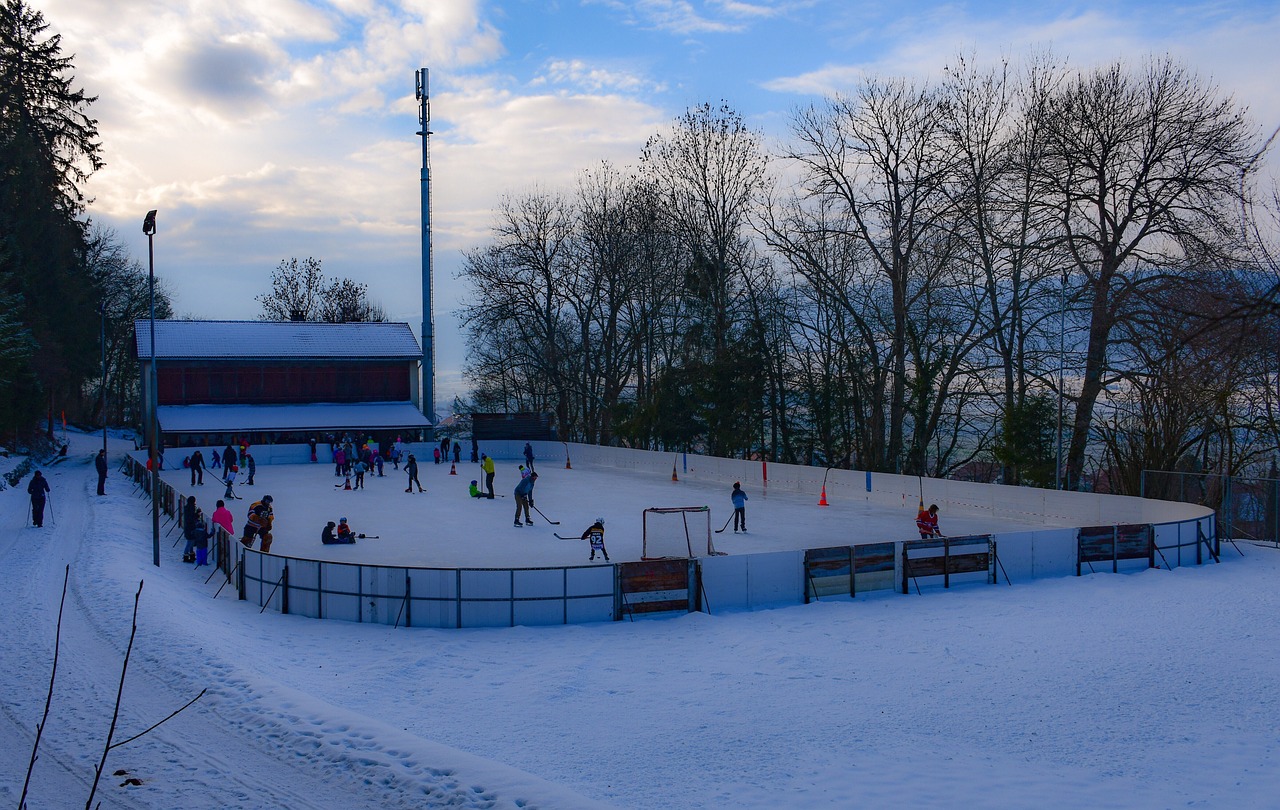
Pittsburgh hockey is especially suburban in its participation structure. Many young players encounter the sport through local rink complexes, learn-to-play programs, and travel teams rather than outdoor neighborhood ice. The region’s hills, suburbs, and spread-out communities mean that rink access can shape who plays, how often they play, and how far families must travel for games or practices.
The Penguins’ presence helps connect these scattered hockey communities. A child playing in a local youth program can see a direct professional symbol in the same metro area. That connection between NHL fandom and local participation is one of the defining features of Pittsburgh hockey.
Youth Hockey and Player Development in Pittsburgh
Youth hockey in Pittsburgh has grown because of the Penguins’ visibility and the region’s rink network. The franchise has helped make the sport more familiar to families who might otherwise prioritize football, basketball, baseball, soccer, or lacrosse. Pittsburgh’s youth hockey culture is not as old or as deep as Minnesota’s or Massachusetts’, but it is real and has become more developed over time.
The local pathway usually begins with learn-to-skate and learn-to-play programs, then moves into house leagues, travel hockey, school teams, and higher-level club competition. For serious players, the next step may involve regional travel, junior hockey, prep opportunities, or college hockey pathways outside the city.
Cost is an important part of the Pittsburgh hockey story. Like many American markets, the sport requires equipment, ice time, travel, coaching, and tournament fees. That can limit participation, especially compared with lower-cost sports. The strength of the local youth system depends on keeping entry points accessible enough for new families while still supporting competitive players who want to pursue higher levels.
Pittsburgh is also part of a larger western Pennsylvania hockey region. Youth players may compete across the Pittsburgh area, into central Pennsylvania, Ohio, western New York, and nearby Mid-Atlantic markets. That regional competition gives local players more opportunities than the city alone would provide.
Famous Hockey Players and Local Hockey Figures from Pittsburgh
Pittsburgh’s most famous hockey figures are strongly tied to the Penguins. Mario Lemieux is the defining name. He was not from Pittsburgh, but he became one of the city’s most important athletes, saved and shaped the franchise in multiple ways, and remains central to the city’s hockey identity.
Sidney Crosby holds a similar place in the modern era. Like Lemieux, Crosby is not a Pittsburgh native, but his career turned the Penguins into a championship team again and gave the city a second generational hockey era. Evgeni Malkin, Kris Letang, Marc-Andre Fleury, Jaromir Jagr, Ron Francis, Tom Barrasso, Paul Coffey, and other Penguins stars are also part of Pittsburgh’s hockey memory.
The city has also produced and developed players through its local hockey system, though Pittsburgh is better known as an NHL market than as one of North America’s largest player-producing hotbeds. That has changed somewhat as hockey has grown locally. More players from western Pennsylvania have reached higher levels, helped by better rinks, stronger youth programs, and the visibility of the Penguins.
Pittsburgh’s hockey figures also include coaches, broadcasters, and builders. Mike Lange, the longtime Penguins broadcaster, became part of the emotional sound of hockey in the city. In Pittsburgh, hockey identity is not built only by players on the ice. It is also built by the voices, arenas, teams, and memories that make the sport feel local.
Women’s and Girls’ Hockey in Pittsburgh
Women’s and girls’ hockey in Pittsburgh has grown as the overall local hockey ecosystem has expanded. Girls in the region can enter the sport through youth associations, co-ed programs, girls’ teams, school hockey, and regional club opportunities. The presence of a major NHL team also gives young players more visibility and a stronger local hockey culture than many similar-sized markets have.
Pittsburgh does not have the same women’s hockey profile as Minnesota, Massachusetts, Ontario, or Quebec, but the growth of girls’ hockey gives the city an important next step. More dedicated teams, better coaching, and clearer pathways to college hockey can help turn the Penguins’ broad fan base into deeper participation for girls and young women.
The Future of Hockey in Pittsburgh
The future of hockey in Pittsburgh depends on keeping the sport connected to both the Penguins and the grassroots community. The NHL team gives the city visibility, history, and emotional attachment. The local rink network gives the sport its participation base.
Pittsburgh does not need to prove that it is a hockey city. The Penguins have already done that. The next stage is about affordability, youth access, girls’ hockey growth, rink stability, and making sure the sport remains strong beyond the professional arena. If those pieces hold, hockey will continue to be one of Pittsburgh’s defining sports.




Interested in Sports in Pittsburgh?
American Football in Pittsburgh | Baseball in Pittsburgh | Basketball in Pittsburgh | Cricket in Pittsburgh | Football (Soccer) in Pittsburgh | Rugby in Pittsburgh